Role-Based Project Management Software
Why Project Size Matters: Managing Projects from Millions to Billions
January 28, 2026
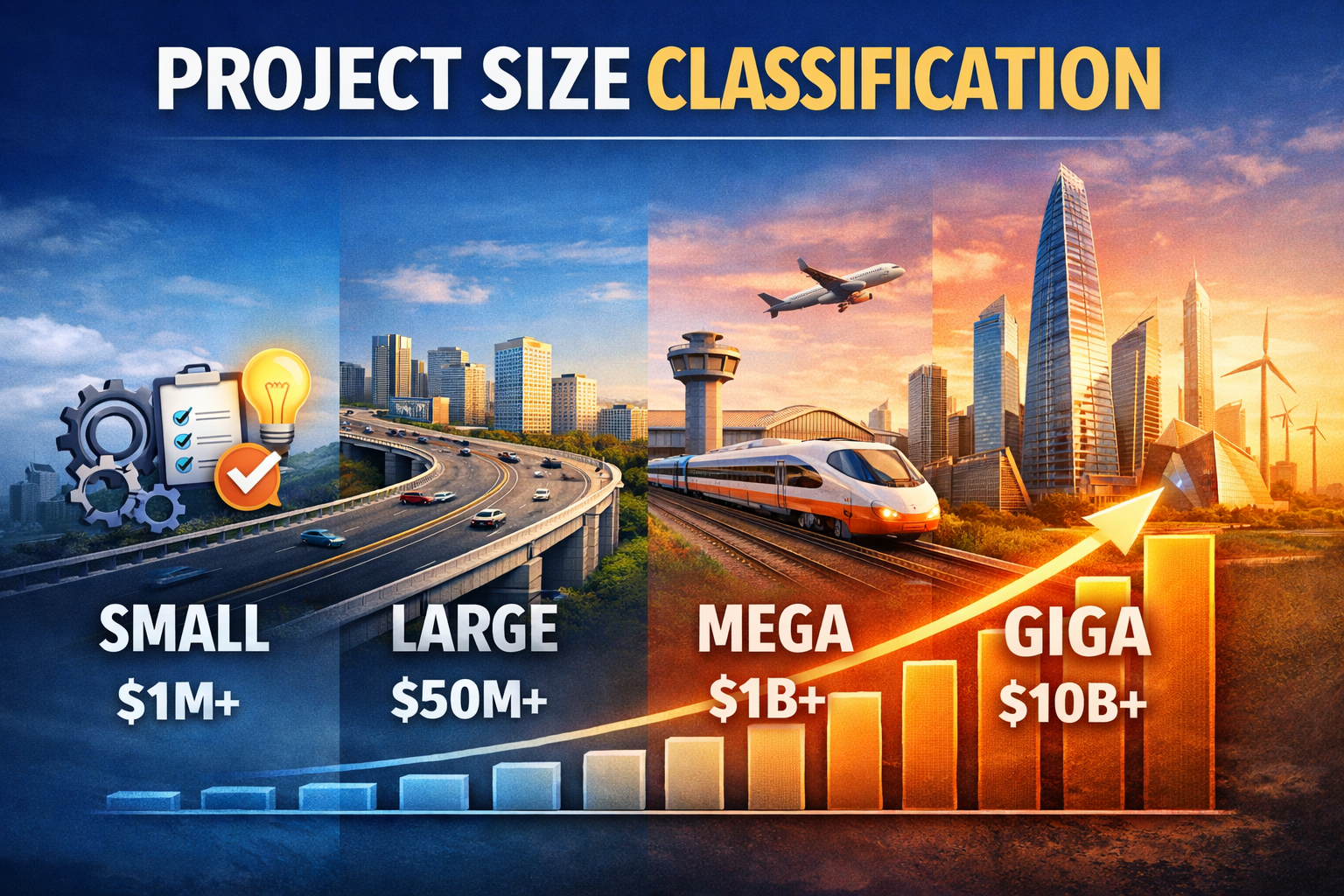
Project Size Classification : From Small Projects to Giga Infrastructure Programs
Project size classification plays a critical role in determining how projects are planned, governed, and delivered. From small internal initiatives to multi-billion-dollar giga projects, management approaches, tools, and risks evolve significantly as scale increases.
In this guide, we explain project size categories, their management implications, and highlight large, mega, and giga projects shaping global infrastructure through 2030.
What Is Project Size Classification? (Quick Answer)
Project size classification is the practice of categorizing projects based on budget, complexity, duration, and impact. It helps organizations select the right project management methodology, governance structure, and PPM tools.
Common categories include:
- Small projects
- Medium projects
- Large projects
- Mega projects
- Giga projects
Why Project Size Matters in Project Management
Project size directly influences:
- Risk exposure
- Stakeholder complexity
- Governance requirements
- Resource planning
- Technology and PPM platform needs
As projects grow in scale, informal coordination becomes ineffective, making enterprise Project & Portfolio Management (PPM) essential.
Project Size Categories and Characteristics
Small Projects (Under $1M)
Definition: Low-cost, low-complexity initiatives
Examples: Internal process improvements, pilot projects
Management approach: Agile, lightweight planning, minimal governance
Medium Projects ($1M–$50M)
Definition: Moderately complex, cross-functional projects
Examples: System implementations, regional expansions
Management approach: Structured planning, risk tracking, progress reporting
Large Projects ($50M–$1B)
Definition: High-budget, long-duration initiatives
Examples: Highways, metro lines, industrial plants
Management approach: Formal governance, PMOs, integrated PPM systems
Mega Projects ($1B–$10B+)
Definition: National or global infrastructure programs
Examples: High-speed rail, major airports
Management approach: Program management, advanced risk and stakeholder control
Giga Projects ($10B+)
Definition: Transformational, multi-decade initiatives
Examples: Smart cities, economic corridors, energy transitions
Management approach: Portfolio-level governance, enterprise-wide PPM platforms
Management Implications by Project Size
Small and Medium Projects
Organizations benefit from:
- Flexibility and speed
- Simple collaboration
- Scalable PPM tools that avoid over-engineering
Large, Mega, and Giga Projects
These projects require:
- Multi-level governance and approvals
- Risk, dependency, and scenario management
- Portfolio visibility across phases
- Integration with finance, procurement, and asset systems
Few Worlds Large, Mega & Giga Projects Planned Through 2030
Large Infrastructure Projects
- Delhi–Mumbai Expressway (India) – Logistics corridor enhancing national connectivity
- Zojila Tunnel (India) – Strategic all-weather Himalayan infrastructure
- Doha Metro Expansion (Qatar) – Urban mobility enhancement
Mega Infrastructure Projects
- Mumbai–Ahmedabad Bullet Train (India) – India’s first high-speed rail corridor
- California High-Speed Rail (USA) – One of the world’s largest rail programs
- Changi Airport Terminal 5 (Singapore) – Future-ready global aviation hub
- Noida International Airport (India) – Major NCR airport development
Giga Infrastructure Projects
- NEOM (Saudi Arabia) – $500B+ futuristic smart city
- China–Pakistan Economic Corridor (CPEC) – Regional trade and energy corridor
- Grand Paris Express (France) – Europe’s largest metro expansion
How Project Size Impacts PPM Tool Selection
Key takeaway:
The larger the project, the greater the need for enterprise-grade PPM.
| Project Size | Tool Requirement |
| Small | Task management, agile tools |
| Medium | Structured project tracking |
| Large | Enterprise PPM with governance |
| Mega | Program & risk management |
| Giga | Portfolio-wide, integrated PPM |
Frequently Asked Questions
What is the difference between mega and giga projects?
Mega projects typically cost $1B–$10B+, while giga projects exceed $10B and often involve multi-country, multi-decade execution with transformational impact.
Why do large projects fail more often?
Large projects face higher failure rates due to complexity, stakeholder misalignment, scope creep, and inadequate governance or PPM maturity.
Which industries use giga projects?
Common industries include infrastructure, transportation, energy, smart cities, defense, and national digital transformation.
The PMPeople Perspective on Scalable Project Management
At PMPeople, we believe project success depends on scaling governance and visibility without sacrificing agility. As the world moves toward mega and giga-scale investments, organizations need PPM platforms that grow with ambition—from small initiatives to nation-shaping programs.
Because in today’s project economy, managing size effectively is the difference between execution and excellence.